Parking Rules & Stopping Ban Areas in Sweden
(Parkering, Stannande & Lastning)
Parking and stopping rules are among the most tested topics on the Swedish driving theory exam. Understanding where you may park, where you may only stop briefly, and where stopping is completely forbidden is essential both for the test and for everyday safe driving.
1) Definitions: “Stop” vs “Park”
Stopping (stanna)
Stopping means standing still for a short period to:
- let a passenger get in or out
- load or unload items
- prevent danger (example: emergency stop)
Parking (parkera)
Parking means standing still longer than the time required for loading, unloading, or picking up/letting off passengers.
2) General Swedish Parking Rules
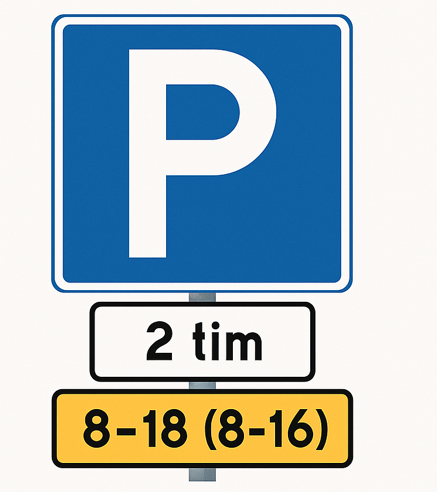
By default, you may park on the right-hand side of the road unless signs or road markings say otherwise.
- Parking must not cause danger or hinder traffic.
- You must follow additional panels (tavlor) under parking signs.
- You must not park on bicycle lanes or pedestrian paths.
- You must use parking discs (P-skiva) where required.
- Parking rules apply to all vehicles unless otherwise stated.
3) Places Where Stopping Is Forbidden (Förbud att stanna)

Stopping is completely forbidden in the following places:
| Location | Description |
|---|---|
| On or in a pedestrian crossing | Never stop on the crosswalk. |
| Within 10 m of an intersection | Measured from where the curb begins to curve. |
| In front of Stop or Yield signs | Blocking visibility creates danger. |
| In tunnels / narrow roads | Stopping creates significant risk. |
| At bus stops | Stopping is forbidden 20 m before & 5 m after the bus stop sign. |
4) Places Where Parking Is Forbidden (Förbud att parkera)
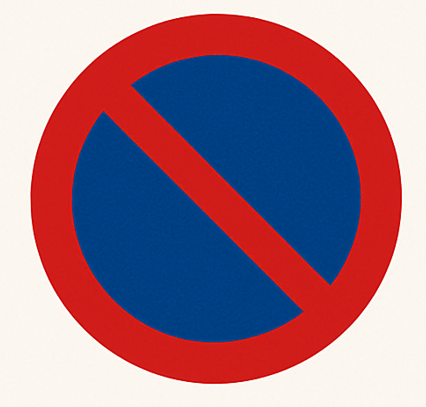
You may briefly stop, but you may not park, in these locations:
- Within 30 m of a railway crossing
- On a hill with poor visibility
- Outside built-up areas on the left-hand side of the road
- Next to another parked vehicle (double parking)
- In front of driveways (utfart)
5) Loading Zones (Lastplats)
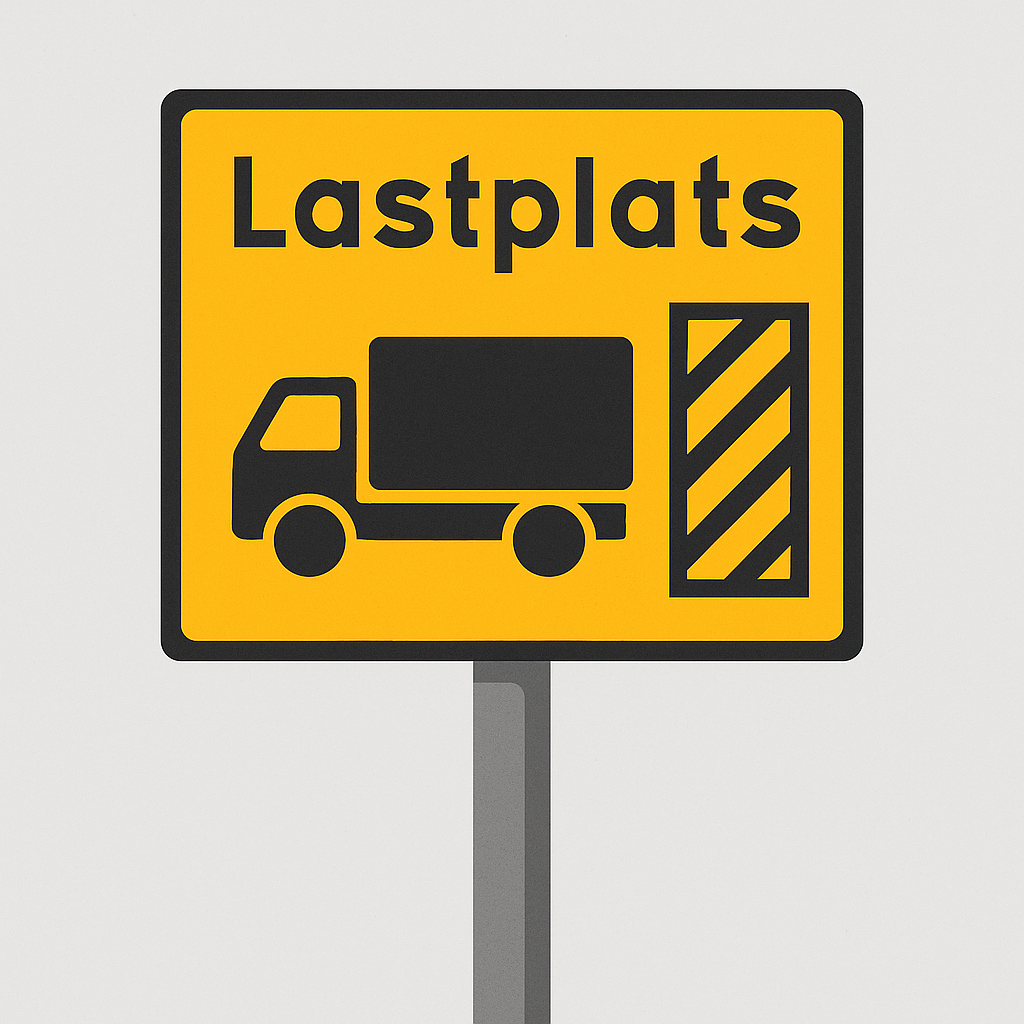
A Lastplats is a dedicated area for loading/unloading goods. These zones are marked with:
- Yellow curb markings
- Supplementary signs showing permitted times
- “Lastplats” text on a panel
Passengers may be picked up or dropped off unless signs prohibit stopping.
6) Understanding Time Plates & Zone Parking

Time plates explain when parking is allowed, forbidden, or requires payment or a parking disc.
| Symbol | Meaning |
|---|---|
| Black text | Applies on weekdays |
| Black text in parentheses | Applies Saturdays |
| Red text | Applies Sundays & holidays |
A “Zon” sign means the same rules apply until you see an end-of-zone sign.
7) Special Parking Zones
Residential Parking (Boendeparkering)
Requires a valid residential permit; usually limited to residents in specific districts.
Disabled Parking (Handikapparkering)
Marked with wheelchair symbol. Only for vehicles carrying persons with valid permits.
Electric Vehicle Charging Spaces
Parking allowed only when charging.
8) Common Parking & Stopping Fines (Ordningbot)
Typical fines range from 700–1300 kr, depending on the city.
| Violation | Example Fine |
|---|---|
| Parking in forbidden area | 1000–1300 kr |
| Stopping in forbidden zone | 1100–1300 kr |
| No disc where required | 500–700 kr |
9) Realistic Exam-style Examples
Example 1 — Parking near intersection
You may not park within 10 meters of the intersection.
Example 2 — Stopping at a bus stop
You may not stop 20 m before or 5 m after the bus stop sign.
Example 3 — Loading zone with times
If the plate shows “Lastplats 08–18”, loading is only allowed during these hours.
10) Summary
- Stopping and parking have different meanings
- Stopping is forbidden in more places than parking
- Loading zones require active loading/unloading
- Time plates define when rules apply
- Zone parking applies until an end sign
Ready to Practice?
Try 350+ mock theory questions covering parking rules, signs, and real exam scenarios.
Start Practice Test